
How to Build a PPC Campaign That Compounds (Not Just Converts)
Most PPC campaigns are optimized for one thing: the next sale. But by 2026, the professionals winning aren't just chasing conversions anymore. They're building campaigns that compound—where each customer fuels growth for the next, and margins expand over time rather than shrink.
Boost Your Business
Most PPC campaigns measure success in the same way: cost per acquisition, conversion rate, return on ad spend. These metrics are useful for today. But they don't account for tomorrow. A customer acquired at a 3:1 ROAS today might be worth 8:1 ROAS a year from now if they buy again, refer someone, or upgrade to a higher-value offering.
The campaigns built for long-term profitability aren't just optimizing for conversion. They're structuring for compounding returns—where early customers fund the acquisition of better customers, and growth accelerates without proportional spending increases. This guide walks you through building that system.
Table of Contents
- Step 1: Shift Your Success Metric from Conversion to Compounding Value
- Step 2: Structure Your Account for Long-Term Data Collection
- Step 3: Build Audience Segments That Compound
- Step 4: Optimize for Retention, Not Just First Purchase
- Step 5: Use Conversion Data to Sharpen Targeting
- Step 6: Measure True Compound Returns
Step 1: Shift Your Success Metric from Conversion to Compounding Value
The default PPC metric is ROAS (return on ad spend). It answers: "For every dollar I spend on ads, how many dollars do I get back?" Simple. Useful. Incomplete.
A campaign that spends $1,000 and generates $3,000 in first-purchase revenue looks like a 3:1 ROAS winner. But if those customers never buy again, your true profitability is $2,000 minus overhead. If they do buy again (and refer someone), that same 3:1 first-purchase ROAS becomes an 8:1 lifetime ROAS. Same ad spend. Entirely different outcome.
Most PPC pros stop at first-purchase metrics because they're easy to measure and control. But the platforms—Google, Meta, TikTok—have built sophisticated machine learning systems designed specifically to optimize for long-term customer value. They just need you to give them the right signal.
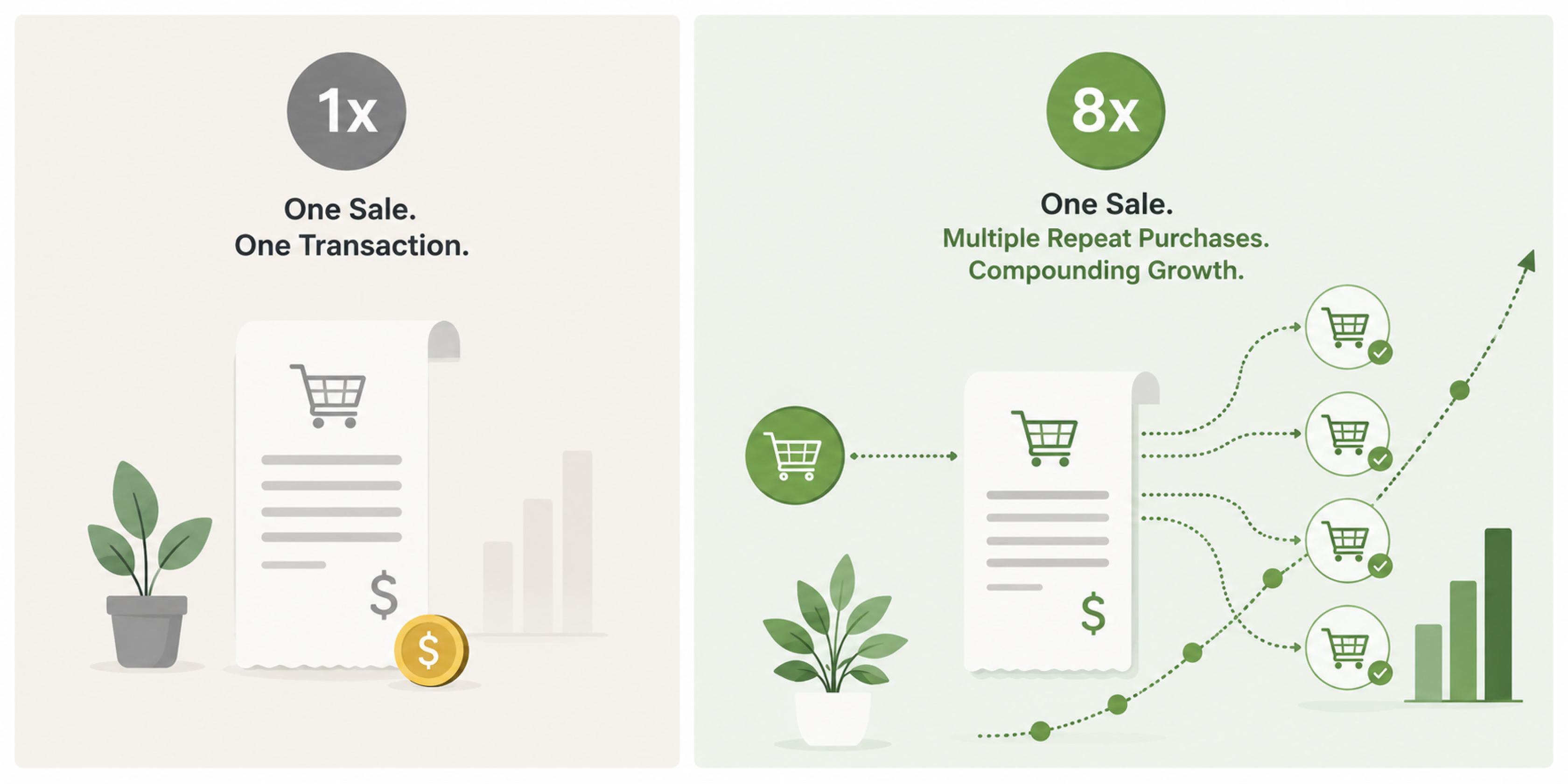
What to do:
- Stop optimizing for cost per acquisition alone. Track it, yes. But don't let it be your north star. Instead, define your compounding goal: "Acquire customers for under $50 that have a 60% chance of repurchasing within 12 months."
- Move your optimization signal upstream. Most platforms allow you to optimize toward lifetime value, customer value, or repeat purchase probability. Google Ads has value-based bidding; Meta has value optimization. Use these.
- Define what "compounding" means for your business. For SaaS, it might be: customers acquired at a 2:1 ROAS with an 80% net retention rate. Write it down. Share it with your team. Optimize toward it.
| Metric | Conversion-Focused | Compounding-Focused |
|---|---|---|
| Primary KPI | Cost per acquisition | Customer lifetime value + repeat purchase rate |
| Success Definition | $50 CPA, 5% conversion rate | $50 first purchase, 40% repeat rate = $125 LTV |
| Optimization Signal | Minimize cost per click | Maximize predicted customer value |
| Scaling Strategy | Bid higher, expand keywords | Invest in better customers, not more clicks |
| Measurement Window | 30 days | 12 Months |
Business Benefit: When you optimize for compounding value instead of one-time conversions, you unlock the ability to spend more on acquisition today because you know the back-end math works.
Business Benefit: When you optimize for compounding value instead of one-time conversions, you unlock the ability to spend more on acquisition today because you know the back-end math works.
Step 2: Structure Your Account for Long-Term Data Collection
You can't measure what you don't track. And you can't optimize for what you can't measure. Most PPC accounts are structured for quarterly performance: campaigns organized by channel, season, or keyword volume. But if you want to see compound returns, you need an account structure that makes long-term customer behavior visible.
You can't measure what you don't track. And you can't optimize for what you can't measure. Most PPC accounts are structured for quarterly performance: campaigns organized by channel, season, or keyword volume. But if you want to see compound returns, you need an account structure that makes long-term customer behavior visible.
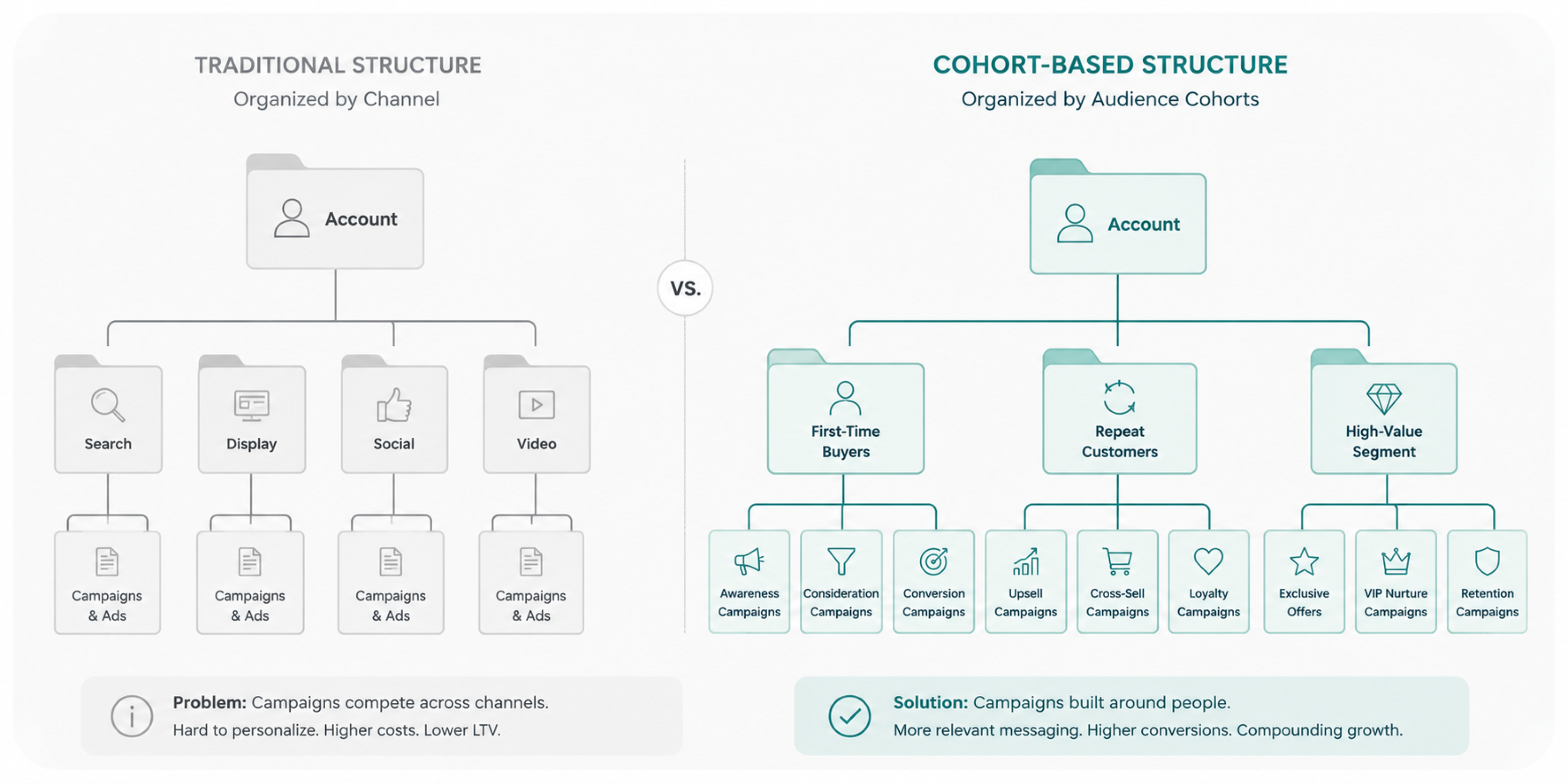
What to do:
- Reorganize by customer cohort, not just channel. Instead of "Google Search - Q3," structure campaigns as "First-Time Buyers - Search," "Repeat Customers - Prospecting." This makes visible which segments compound.
- Implement conversion tracking for repeat purchase and customer value. Add events for: second purchase, customer lifetime value thresholds, repeat purchase rate.
- Use UTM parameters consistently. Every ad should pass clean UTM data so you can track cohorts end-to-end.
- Set up attribution modeling that goes beyond last-click. This lets you see which channels truly drive compounding customers.
Business Benefit: An organized account makes it obvious which campaigns are compounding and which are just converting.
Business Benefit: An organized account makes it obvious which campaigns are compounding and which are just converting.
Step 3: Build Audience Segments That Compound
Audiences are the accelerant. A well-built audience segment isn't just "people interested in hiking." It's "people who bought backpacks from us 6-12 months ago and haven't bought since, have visited our website in 60 days, and are likely to buy again." That specificity is what makes compounding work.
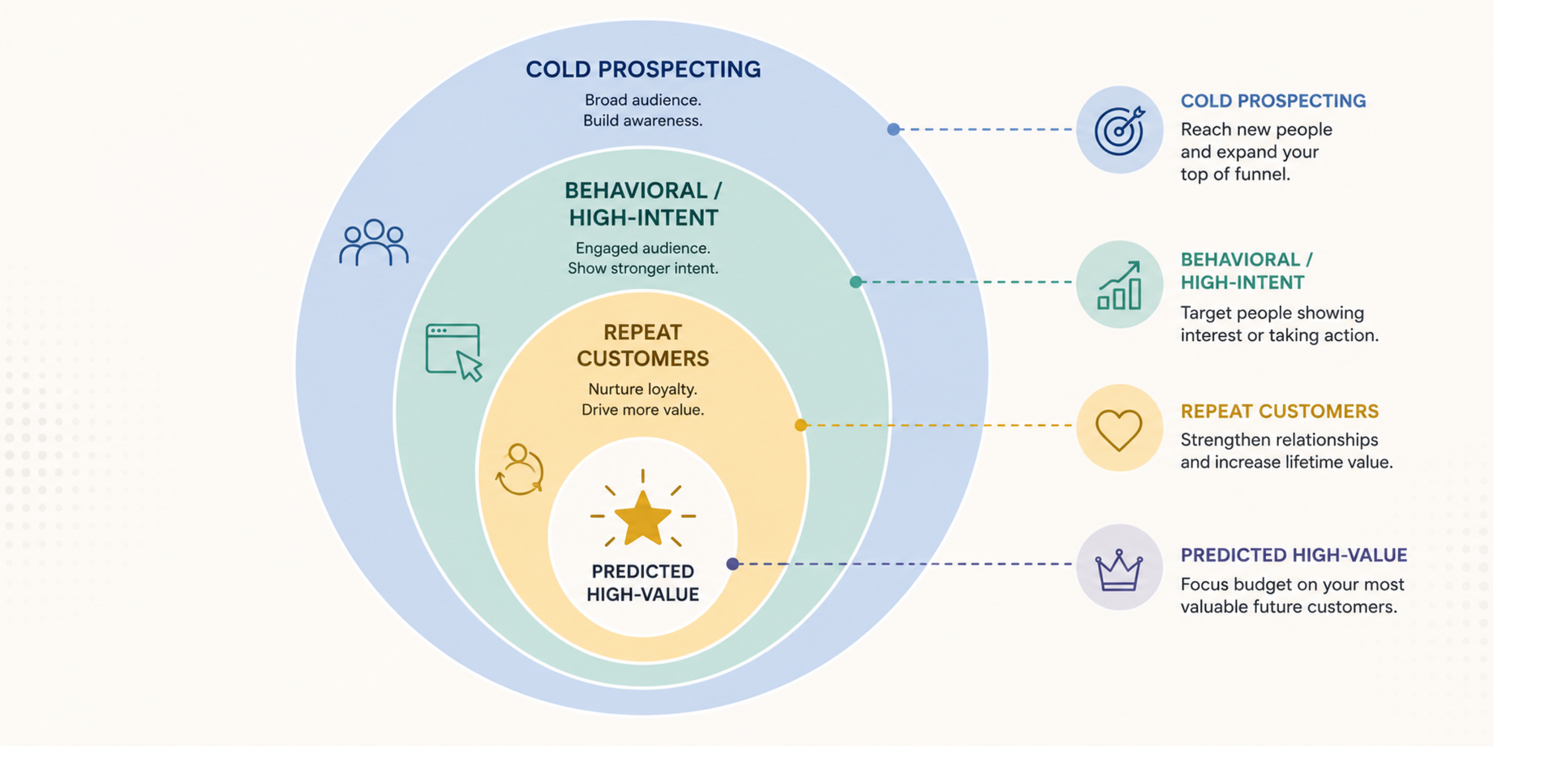
What to do:
- Build repeat-customer audiences. Create a custom audience of customers who purchased 90-180 days ago. Target them with complementary products or upgrades. These convert at 3-5x higher rates.
- Create behavioral audiences from your website. "Users who visited pricing but didn't convert," "users who viewed your highest-margin product." These are high-intent audiences.
- Build lookalike audiences from your best repeating customers. Create lookalikes from "customers with 50%+ repeat purchase rate," not just any customer.
- Set up predictive audiences. Use Google and Meta's predictive audiences to bid higher on people predicted to compound, lower on those predicted to be one-time buyers.
| Audience Type | Composition | Expected Compound Benefit |
|---|---|---|
| Cold prospecting | Interest-based or lookalike from all customers | Standard conversion rate; 20-30% repeat rate |
| Repeat-customer reactivation | Previous customers, 90-180 days post-purchase | 3-5x higher conversion; 60%+ repeat rate |
| High-intent behavioral | Visited pricing, added to cart, viewed top product | 2-3x higher conversion; 40%+ repeat rate |
| Predicted high-value | Lookalike from 50%+ repeating cohort | Standard volume; 45%+ repeat rate |
Business Benefit: Audiences targeting repeat customers or high-intent segments convert at higher rates and repeat at higher rates, creating a flywheel where successful cohorts fund acquisition of similar cohorts.
Business Benefit: Audiences targeting repeat customers or high-intent segments convert at higher rates and repeat at higher rates, creating a flywheel where successful cohorts fund acquisition of similar cohorts.
Step 4: Optimize for Retention, Not Just First Purchase
First-purchase optimization is a trap. It's easy to measure, easy to optimize, and easy to run out of. Every first-time buyer has a ceiling. Repeat customers have infinite potential.
Yet most PPC budgets spend 80-90% on new customer acquisition and 10-20% on retention. It's backwards. The math doesn't work.
Consider how subscription businesses approach this: they bid aggressively to acquire a customer at a loss because they know the lifetime value is $500+. That's compounding logic. Your PPC strategy should work the same way.
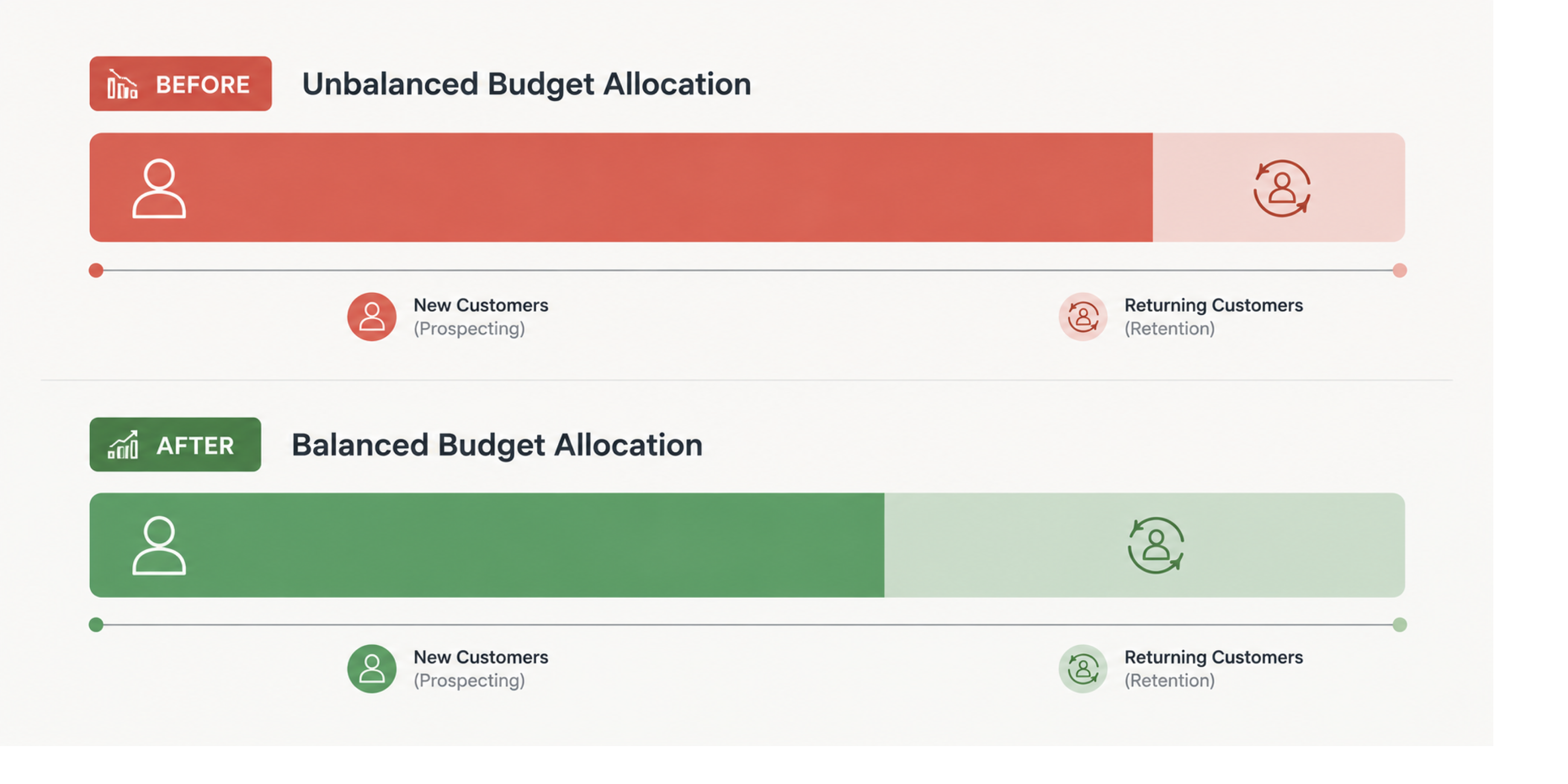
What to do:
- Allocate 30-40% of budget to retention campaigns. Run ads to previous customers with offers for repeat purchase, loyalty program enrollment, or upgrade opportunities. These have 3-5x better ROAS.
- Test lower-margin first-purchase campaigns. If you know repeat customers are 8:1, try lowering acquisition targets. You'll acquire more customers who repeat, and total profit grows.
- Build sequential messaging for retention. Don't just retarget with "buy again." Use a sequence: first ad (5-14 days) is "here's how to use it," second (15-30 days) is "complementary products," third (30-60 days) is "come back."
- Set retention as a campaign objective. Meta and Google offer "customer value" or "repeat purchase" optimization. Use them. The algorithms outperform manual bidding.
Business Benefit: Campaigns optimized for retention fund the acquisition of better customers because margins expand over time. You can afford to spend more on acquisition when 40% of customers will buy again.
Business Benefit: Campaigns optimized for retention fund the acquisition of better customers because margins expand over time. You can afford to spend more on acquisition when 40% of customers will buy again.
Step 5: Use Conversion Data to Sharpen Targeting
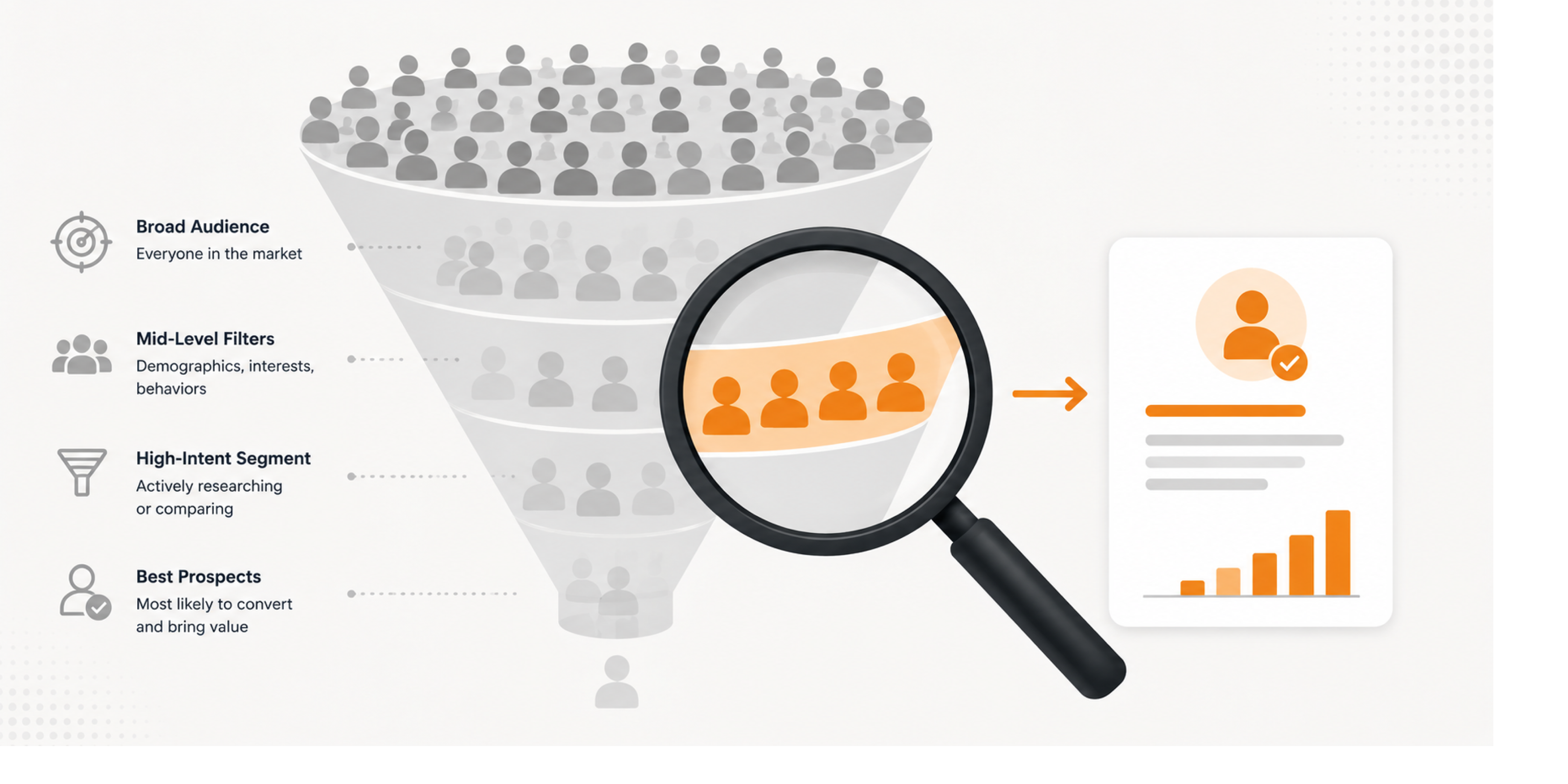
Every conversion tells a story. It says: "This person, with this demographic, on this device, from this audience, converted." Most people ignore the story. They optimize the channel and move on. Compounding campaigns read every story.
What to do:
- Analyze which targeting parameters drive compounding customers. Look at conversion data and ask: which demographics or audiences drive customers with 50%+ repeat rates? Double down. Which drive 10% repeat rates? Cut them.
- Create exclusion lists from non-compounding cohorts. If certain audience segments drive one-time buyers, exclude them from retention campaigns.
- Use sequential bidding by cohort. Bid higher for audiences proven to repeat. Bid lower (or zero) for audiences that never repeat.
- Update targeting quarterly based on repeat-purchase data. Set a reminder to review data every 90 days, identify compounding segments, and adjust.
Business Benefit: Tight targeting based on repeat-purchase data means every ad dollar chases customers more likely to compound, improving total profitability and reducing wasted spend.
Business Benefit: Tight targeting based on repeat-purchase data means every ad dollar chases customers more likely to compound, improving total profitability and reducing wasted spend.
Step 6: Measure True Compound Returns
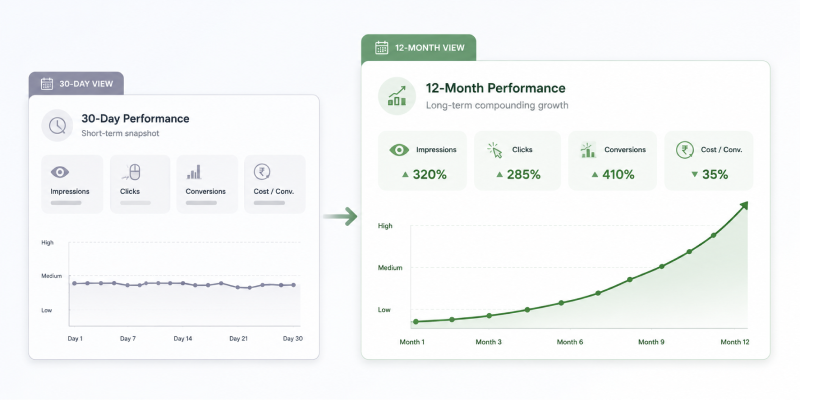
You can't manage what you don't measure. And most PPC dashboards only measure the first 30 days. Compounding returns happen over 12 months. If you measure only 30 days, you'll never see them.
What to do:
- Track customer lifetime value by acquisition cohort. Create a dashboard that shows: "Customers acquired in January had a 3:1 first-purchase ROAS and an 8:1 12-month ROAS." This is the metric that matters.
- Measure repeat purchase rate and speed. Track: what percentage of customers made a second purchase? How many days until second purchase?
- Calculate payback period. Payback period is: how many days until a customer's lifetime purchases exceed their acquisition cost? If payback is 60 days and customer lifetime is 24+ months, you can spend more on acquisition.
- Build a 12-month dashboard, not a 30-day dashboard. Show cohort date, first-purchase ROAS, 90-day repeat rate, 12-month customer value, and 12-month ROAS.
| Timeframe | Metric | Why It Matters |
|---|---|---|
| 30 days | ROAS, CPA, conversion rate | Initial validation of ad performance |
| 90 days | Repeat purchase rate,customer retention | Early signal of compounding potential |
| 12 months | Lifetime value, 12-month ROAS, referral rate | True profitability and compounding effect |
Business Benefit: Measurement reveals which campaigns are truly profitable and compounding. You'll likely find that "underperforming" 30-day campaigns are actually your most profitable long-term ones.
Business Benefit: Measurement reveals which campaigns are truly profitable and compounding. You'll likely find that "underperforming" 30-day campaigns are actually your most profitable long-term ones.
At-a-Glance Summary
| Step | Key Action | Expected Outcome |
|---|---|---|
| 1 | Shift from CPA to customer lifetime value optimization | Unlock ability to spend more on acquisition today |
| 2 | Restructure account by cohort and add repeat-purchase tracking | See which campaigns compound and which don't |
| 3 | Build repeat-customer and high-intent audiences | 3-5x better conversion on retention vs prospecting |
| 4 | Allocate 30-40% of budget to retention campaigns | Expand margins; fund better customer acquisition |
| 5 | Analyze repeat-purchase data by targeting segment | Bid higher on proven compounding cohorts |
| 6 | Track 12-month LTV, not just 30-day ROAS | Reveal which campaigns are truly profitable |
Real-World Results: SaaS Company Shifts to Compounding PPC
Situation: A B2B SaaS platform was spending $100K monthly on ads. First-purchase ROAS was 3:1, but payback period was 180+ days, and repeat purchase rates were only 20%. Growing but margins shrinking.
What They Did: Shifted optimization to customer value, restructured account by cohort, created repeat-customer audiences, allocated 30% to retention, implemented 12-month LTV tracking, and bid 20% higher on proven repeating audiences.
Results: First-purchase ROAS decreased 3:1 to 2.5:1 (by design), repeat purchase rate increased 20% to 38% in 6 months, payback period decreased 180 to 110 days, 12-month customer value increased 45%, and monthly revenue grew 28% with flat ad spend.
The key insight: they weren't spending more. They were spending smarter, toward customers more likely to compound.
Every dollar in PPC can either be a one-time transaction or the beginning of a customer relationship. The campaigns built to compound aren't more complex. They're just oriented differently. They measure differently. They optimize differently. Start with your metric. Everything else follows.
Every dollar in PPC can either be a one-time transaction or the beginning of a customer relationship. The campaigns built to compound aren't more complex. They're just oriented differently. They measure differently. They optimize differently. Start with your metric. Everything else follows.
If you're building a paid advertising system designed to compound, you need clarity on customer economics, targeting precision, and measurement discipline. XCCELER helps growth-stage SaaS and e-commerce companies architect paid advertising systems that optimize for long-term profitability, not just conversions.
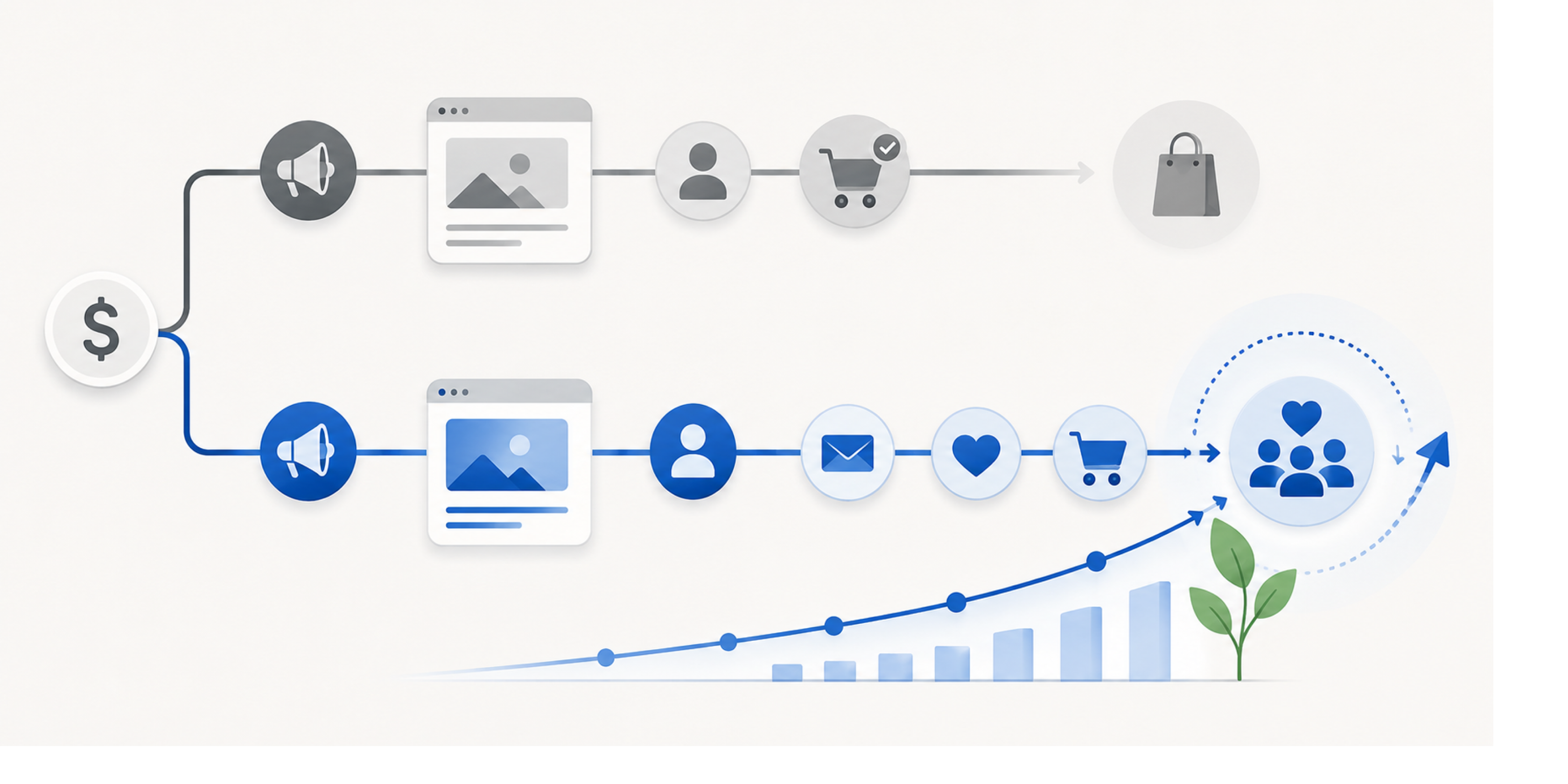
Every dollar in PPC can either be a one-time transaction or the beginning of a customer relationship. The campaigns built to compound aren't more complex. They're just oriented differently. They measure differently. They optimize differently. Start with your metric. Everything else follows.
Shais Ahmed
Founder & CEO, XCCELER
6+ years building scalable paid advertising systems that shift from unit economics to compounding customer value for SaaS and e-commerce brands.